

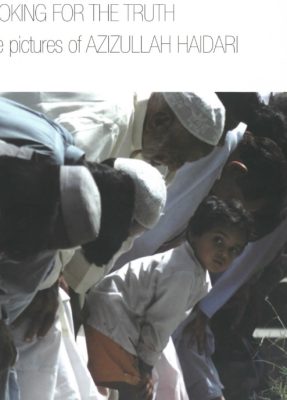
Azizullah Haidari
[Reuters]
What drove Aziz Haidari to return to his native Afghanistan to witness the final agony of the Taliban regime in November 2001 was his unshakeable belief that reporting the news, accurately, faithfully, truthfully, can make all the difference. It was that same belief that made Aziz’s nine-year association with Reuters such a profound one, and such a happy one.
Happy, until that disastrous November 19, 2001, when Aziz was murdered in an ambush as he travelled with Reuters cameraman Harry Burton, himself a newsman of extraordinary talent and achievement, along the road from Jalalabad to Kabul.
The deaths of Aziz and Harry left all of us in the journalistic fraternity shattered. Now, a year on, their memory remains alive and bright – Aziz’s as a colleague of great integrity, professionalism and commitment but also as a warm and generous man, a loving husband to Sadia, a doting father to Amad and Aleena, and a friend endowed with a mischievous sense of humour.
It is to commemorate his amazing achievements, but also to ensure his memory lives on, that we’re publishing this book featuring some of Aziz’s finest photographs, made drawing on all the photographic skills he taught himself during his years with Reuters. The pictures show the world as only Aziz could see it, and through them, we, in turn, can see Aziz again.
I met Aziz Haidari on a visit to Reuters Islamabad bureau in May 2001. My notes from the trip said ‘AZIZULLAH HAIDARI, 32, joined Reuters August 1992, an Afghan refugee, been with Reuters nearly ten years…’ What I didn’t write was that Aziz was an impressive young man, polite, always smiling. He had the fire in the belly that good journalists have. He spoke Urdu, Pashto, and Dari, was an efficient translator, and also took a mean picture when called upon. He was impressive. He had a future.
That future was snuffed out brutally just six months later, when Aziz, his Reuters Television colleague Harry Burton, and two other journalists were shot and killed by unidentified bandits in the dusty Sarobi Gorge on the Kabul–Jalalabad highway in Afghanistan. Aziz, who had been on a war correspondent’s training course just a few weeks before, had travelled full of excitement, into a new Afghanistan.
It was to be a brief and cruel homecoming. The previous night in Jalalabad, Aziz had been his usual friendly self, helping other journalists hook up on a satellite phone. Harry, another gregarious man, spoke with his Australian girlfriend. Both Aziz and Harry were 33 years old. Both rode out the next morning in the same car to their deaths.
Alistair Lyon was Reuters bureau chief in Pakistan when Aziz worked as a part-timer whose main task was to monitor the evening news on Afghan radio and translate faxes from the Pakistan-based Afghan Islamic Press. “Aziz was a wonderfully cheerful individual, given the hardships of life as a refugee in Pakistan, which included the constant risk of being picked up by the police for having the wrong papers — the government was trying to stop Afghan refugees from slipping into cities and evading its control,” Lyon says. “Aziz was also well-read and had a wealth of knowledge about Afghanistan and the region.”
Things slipped a bit however when for a few months Aziz took to showing up late for work. “He always apologised profusely for these lapses and showed no lack of enthusiasm for work, so it was hard to get very angry with him,” Lyon said. “It was only later that I discovered the reason for his tardiness. He was courting Sadia, the Pakistani teacher who would later become his wife.”
Aziz married Sadia in 1996. After Lyon left Pakistan Aziz pursued photography with greater zeal. At one point, when the Reuters staff photographer in Islamabad quit, Aziz held the fort ably for five months. His journey into Afghanistan as a photographer was a personal triumph.
Aziz left not only a grief-stricken Sadia but also two little children, Aleena and Amad. His colleagues at Reuters remember him with fondness and sadness. This book is a collection of some of his best pictures. Fittingly, opposite there is a photograph of Aziz himself, astride a horse – proud, eager, ready to charge forward.
CHAITANYA KALBAG, REUTERS EDITOR ASIA




[5704]PHBET Online Casino Philippines: Register, Login & App Download for Top Slots Experience the best at PHBET Online Casino Philippines! Quick phbet register, easy phbet login, and phbet app download for top phbet slots. Play and win today! visit: phbet
[9218]ph567 Online Casino: The Best Legit Gambling Site in the Philippines with Slot Games & Easy GCash Login. Experience ph567 Online Casino, the best legit gambling site in the Philippines. Enjoy top-tier ph567 slot games with a seamless ph567 login gcash experience. Join the #1 legit online casino Philippines today for premium gaming, big wins, and secure payouts! visit: ph567
[5173]q777: The #1 Legit Online Casino in the Philippines with Easy GCash Login and Best Slots App. Experience top-tier gaming at Q777, the #1 legit online casino Philippines players trust. Enjoy the best online slots Philippines has to offer with a seamless q777 login GCash experience for fast, secure transactions. Download the q777 mobile casino app today to join the most reliable q777 legit casino PH and start winning big with 24/7 entertainment. visit: q777
[2375]VVJL Login & Register | Download VVJL Slot App APK – Official Casino Link PH Experience the ultimate gaming thrill at VVJL! Access the official VVJL casino link to complete your VVJL login and register. Download the VVJL slot app APK today for the best casino games in the PH. Join now and win big! visit: vvjl
[6298]BBCCasino Official Site: Best Online Slots in the Philippines. Fast BBCCasino Login, Easy Register, and Mobile App Download for the Ultimate Gaming Experience. Experience top gaming at BBCCasino official site. Fast BBCCasino login, easy register, and BBCCasino app download. Play the best online slots in the Philippines today! visit: bbccasino
[6514]99bon Login: Official 99bon Slot, Register & Download App Philippines. Access the Best 99bon Link Alternatif for Secure Casino Gaming. Official 99bon Login: Experience the best 99bon slot games in the Philippines. Easy 99bon register process for new players! Access our secure 99bon link alternatif and 99bon download app for a premium, secure mobile casino experience. Join the #1 platform for top-tier rewards and reliable gaming today. visit: 99bon
[4417]2jl Casino Philippines: Best 2jl Slot, Easy Login, Register & App Download Experience the best 2jl slot games at 2jl Casino Philippines. Enjoy a fast 2jl login, easy 2jl register process, and a seamless 2jl app download. Join the premier 2jl casino today and start winning big! visit: 2jl
[2063]PH222: Top Casino Games & Slot Online in the Philippines. Easy ph222 Login, Register, and App Download. Experience the best ph222 slot online and ph222 casino games in the Philippines. Secure ph222 login, fast ph222 register, and easy ph222 app download for big wins! visit: ph222
[1605]JollyPH Online Casino: Easy Login, Register, and App Download for the Best PH Slots. Experience the best PH slots at JollyPH Online Casino! Enjoy easy jollyph login, fast jollyph register, and the jollyph app download for non-stop gaming action today. visit: jollyph
[2899]365jl Official Link: Fast 365jl Login, Register & App Download for Top 365jl Slot Games in the Philippines. Join 365jl, the top online casino in the Philippines! Use our 365jl official link for fast 365jl login, easy 365jl register, and 365jl app download. Experience premium 365jl slot games and start winning big today! visit: 365jl
[5318]jljl8: Top Online Casino in the Philippines. Easy jljl8 Login, Register, & Premium jljl8 Slot Games. Get the jljl8 App Download for Big Wins! Experience jljl8, the top online casino in the Philippines. Easy jljl8 login and register process. Play premium jljl8 slot games and get the jljl8 app download for big wins today! visit: jljl8